
BY AMY MCCAIG
As neurological disease surges worldwide and the cost of brain disorders climbs into the trillions, Rice is making a deliberate move. In October 2025, the university launched the Rice Brain Institute, a campus-wide effort uniting engineers, scientists and social scientists in a coordinated push to understand — and protect — the brain. And in January 2026 at the World Economics Forum in Davos, Switzerland, Rice established the Global Brain Economy Initiative in collaboration with The University of Texas Medical Branch and the Davos Alzheimer’s Collaborative.
“Few areas of research have as direct and profound an impact on human well-being as brain health,” Rice President Reginald DesRoches said. “As rates of Alzheimer’s, dementia and other neurological diseases rise in our country and around the world, universities have a responsibility to lead the discovery of solutions that preserve memory, movement and quality of life.”
We all know someone who has been affected by a brain-related health issue. This research is personal. — Reginald DesRoches
Brain disorders, including mental health conditions such as depression and anxiety, cost the global economy an estimated $5 trillion annually and could reach $16 trillion by 2030. Addressing that mounting crisis has become a global imperative.
Located in Houston, at the intersection of Rice and the Texas Medical Center — the world’s largest health care complex — the Rice Brain Institute launches at a pivotal moment. Last fall, Texas voters approved a $3 billion investment to create the Dementia Prevention and Research Institute of Texas, signaling the state’s intent to become a national leader in brain health research.
The Rice Brain Institute integrates three major initiatives — neuroengineering, neuroscience and brain-and-society research — into a single framework designed to move ideas from basic discovery to real-world impact. It reflects a strategic bet: that solving the brain’s most complex problems will require engineering-driven tools, fundamental science and an understanding of how brains function in real human systems.
The Rice Brain Institute: Engineering the brain health enterprise
BY ALEX BECKER
The Rice Brain Institute is not a rebranding exercise or a loose federation of labs. It is a deliberately engineered structure designed to connect discovery, technology and policy under one coordinated umbrella.
At its core are three initiatives: the Neuroengineering Initiative, founded in 2018; the newly established Neuroscience Initiative; and the Brain and Society Initiative, which situates brain research within real-world contexts such as education, work, justice and public health.
We’re scaling a model that turns discovery into impact. The Rice Brain Institute gives us the structure to do that intentionally. — Behnaam Aazhang
Already, the Neuroengineering Initiative has built a foundation for success, securing more than $78 million in research funding and assembling a network of more than 50 collaborators across Rice and the Texas Medical Center. Its work spans neural sensors, soft robotics, neuroimaging, data science and artificial intelligence — tools designed not only to observe the brain, but to interface with it in real time.
“At Rice, we lead with engineering,” said Luay Nakhleh, dean of the George R. Brown School of Engineering and Computing. “Our focus on developing technology that interfaces directly with the brain positions us to make transformative contributions not just in discovery, but in impact.”
The Neuroengineering Initiative, founded in 2018, anchors this effort.
“The Neuroengineering Initiative has shown what’s possible when we merge engineering with neuroscience,” said initiative co-director Behnaam Aazhang, the J.S. Abercrombie Professor of Electrical and Computer Engineering. “With the Rice Brain Institute, we’re scaling that model and building tools that can both illuminate how the brain works and help restore it when it doesn’t.”
Jacob Robinson, professor of electrical and computer engineering and bioengineering, will serve as the other co-director of the Neuroengineering Initiative. Robinson is also the co-founder and CEO of Motif, a startup dedicated to commercializing a neuromodulation device that could revolutionize treatment for drug-resistant depression and other psychiatric or neurological disorders.
“We used to study the brain primarily by observing what went wrong,” Robinson said. “Now we have the tools — and the responsibility — to engineer interventions that restore brain function based on a deeper understanding of how the brain works.” The Brain Institute, he said, is designed not only to help create these tools but to make sure they get to the people who need better solutions for brain health.
“A fundamental understanding of neural development and neurodegeneration is the foundation on which all other exploration builds,” said Thomas Killian, dean of the Wiess School of Natural Sciences. “By integrating this with neuroengineering and psychology, we can accelerate discoveries and translate them into solutions.”
The Neuroscience Initiative complements that work by bringing together cell biologists, neurobiologists, chemists, physicists and biochemists to explore the brain’s most fundamental mechanisms, from molecular interactions to neural circuits.
“The brain’s complexity demands collaboration,” said Rosa Uribe, associate professor of biosciences and co-lead of the Neuroscience Initiative.
Uribe also leads a research group dedicated to studying how neural crest cells differentiate into gut neurons, work that sheds light on the formation of the enteric nervous system, the largest division of the peripheral nervous system, which governs gut function and is critical for digestion. “By connecting our research across disciplines and from very different angles, we can make discoveries that would be impossible in isolation,” Uribe said.
Meanwhile, the Brain and Society Initiative, co-led by Simon Fischer-Baum, associate professor of psychological sciences, situates brain research within the broader social and policy landscape — examining how brain science intersects with education, the work place, justice, technology and public health.
“We want breakthroughs in brain science to lead to breakthroughs in people’s lives,” said Simon Fischer-Baum, associate professor of psychological sciences and co-lead of the Brain and Society Initiative alongside Harris Eyre, the Harry Z. Yan and Weiman Gao Senior Fellow for Brain Health and Society at Rice’s Baker Institute for Public Policy, senior adviser for neuroscience in the Office of Innovation.
“That means that we need to understand the human brain in the context of the kinds of complex behaviors that we do in real-world, relevant settings,” said Fischer-Baum.
Together, the initiatives form a system designed for translation rather than isolation.
“We’re scaling a model that turns discovery into impact,” said Aazhang. “The Rice Brain Institute gives us the structure to do that intentionally.”
A Global Brain Economy
BY ALEX BECKER
Rice launched the Global Brain Economy Initiative in January 2026 during the annual meeting of the World Economic Forum in Davos, Switzerland. This initiative positions brain capital, or brain health and brain skills, at the forefront of global economic development, particularly in the age of artificial intelligence.
The GBEI, based at Rice and launched in collaboration with The University of Texas Medical Branch and the Davos Alzheimer’s Collaborative, aligns with a recent World Economic Forum and McKinsey Health Institute report titled “The Human Advantage: Stronger Brains in the Age of AI,” co-authored by Rice researcher Harris Eyre.
Led by Eyre, the GBEI aims to establish brain capital as an essential asset for the 21st century. As AI transforms workplaces and the global population ages, Rice’s strategy connects neuroscience with economic policy to promote long-term growth, workforce resilience and social well-being.
The GBEI aims to convert research into practical solutions for governments, employers and investors to enhance brain health and human skills. Its mission is to address disparities in support for brain capital across health care, education, workplaces and public policy.
The initiative functions as a global center of excellence and coordinating platform and advances brain capital through four core strategies, including:
- Defining a shared framework that integrates brain health and skills as a unified driver of human and economic performance.
- Measuring impact by establishing common research agendas, standards and metrics for brain capital.
- Testing solutions through real-world pilots that improve cognitive health, workforce performance and local economic outcomes.
- Supporting investment in brain health by developing financing frameworks to attract capital that is aligned with long-term value creation.
In its first year, the GBEI will establish a global brain research agenda, piloting brain economy strategies in select regions and introducing a framework to guide funders and financial leaders. It will also advocate for brain economy public policies at major global forums, including the G7 Summit in France, G20 Summit in the U.S., United Nations General Assembly, World Health Assembly and COP31 in Turkey.
Amyloid Research Takes Center Stage
BY MARCY DE LUNA
As part of the Rice Brain Institute, the new Amyloid Mechanism and Disease Center at Rice is a research hub designed to confront one of neurodegeneration’s most persistent mysteries: how misfolded proteins trigger diseases such as Alzheimer’s and Parkinson’s — and how that process might be stopped.
Led by biophysicist Pernilla Wittung-Stafshede, the center brings together researchers from chemistry, biophysics, cell biology and biochemistry to study how amyloids form, spread and damage brain cells.
To make a real difference, we have to go all the way. That means finding ways to prevent these diseases, not just manage them. — Pernilla Wittung-Stafshede
Wittung-Stafshede, a member of the Nobel Prize committee for chemistry and a fellow of several European science academies, was recruited to Rice through the Cancer Prevention and Research Institute of Texas. A Rice faculty member from 2004-08, she returned to the university after two decades working at other institutions in Sweden, where she led pioneering work on how metal-binding proteins and protein clumps affect disease.
“This is close to my heart,” Wittung-Stafshede said. “My father died of dementia a few years ago. These diseases affect everyone.”
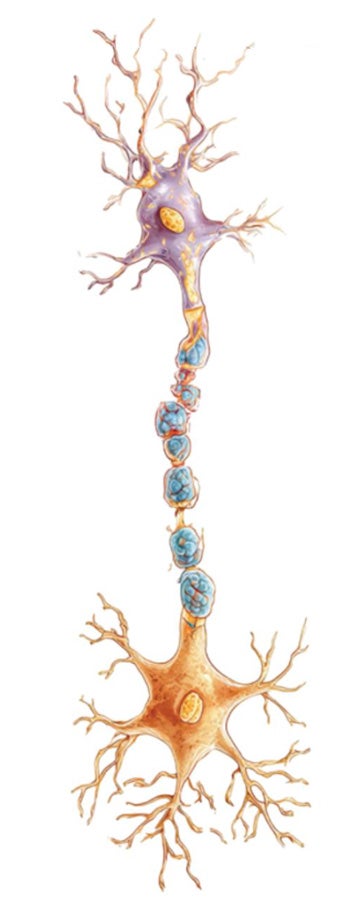
Amyloids are protein polymers that form when proteins misfold and clump together. Their accumulation can kill neurons and erode cognition. Despite decades of study, no cures exist, and current treatments offer only limited relief.
The scale of the challenge is accelerating. Alzheimer’s Disease International estimates that global dementia cases could reach 78 million by 2030 and 139 million by 2050.
The Amyloid Center anchors the neuroscience arm of the Rice Brain Institute, advancing basic research while forging ties with the Texas Medical Center to translate discoveries toward clinical relevance.
Recent work from Wittung-Stafshede’s lab revealed that protein clumps associated with Parkinson’s disease can behave like enzymes, consuming ATP, the brain’s main energy source. The finding suggests amyloids may harm cells through mechanisms beyond simple accumulation.
“These are the kinds of questions we need to answer,” she said. “If we understand the mechanisms, we can intervene — ideally before disease begins.”
The center plans to expand its research team, pursue external funding and host training programs to strengthen Rice’s growing neuroscience ecosystem.
“To make a real difference, we have to go all the way,” Wittung-Stafshede said. “That means finding ways to prevent these diseases, not just manage them.”
International Trailblazers in Brain Health
Project Metis Positions Gulf Coast Institutions as Global Leaders
BY CHRIS STIPES
Rice has joined an ambitious initiative designed to position the Houston–Galveston region as a global leader in brain health and the emerging brain economy.
Led by Center for Houston’s Future, Project Metis brings together Rice, the University of Texas Medical Branch and Memorial Hermann Health System to advance a holistic approach to lifelong brain health, from early development to healthy aging.
“Brain health is the defining frontier of this century,” said Jochen Reiser, president and CEO of UTMB. “Project Metis allows us to unite research, clinical care and innovation at scale.”
Rice’s role is anchored by the Rice Brain Institute, while UTMB’s Moody Brain Health Institute and Memorial Hermann’s comprehensive neurology care extend that work into clinical and community settings.
“Brain health requires a systems approach,” said Amy Dittmar, Rice’s provost and executive vice president for academic affairs. “Together, we can produce discoveries that improve lives here in Texas and around the world.”
Project Metis also emphasizes economic impact. Its leaders envision a brain health ecosystem that includes workforce development, innovation and commercialization — what they describe as the brain economy.
Early plans include launching working groups focused on brain health across life stages, developing a regional brain health index and piloting interventions in education, health care and workplaces. The initiative also aims to share Houston’s progress in international settings such as the World Economic Forum and the United Nations.
“Project Metis is more than an initiative — it’s a movement,” said Center for Houston’s Future CEO David Gow. “By uniting science, innovation and collaboration, we aim to unlock human potential for generations.”
Rice and Paris Brain Institute Forge Transatlantic Partnership
BY BRANDI SMITH
When leaders from Rice and the Paris Brain Institute gathered in Paris last fall, they marked the beginning of a new transatlantic collaboration in brain science and innovation.

Located within Pitié-Salpêtrière Hospital, the Paris Brain Institute brings together more than 900 researchers and clinicians focused on neurological and psychiatric disorders. The partnership connects Rice’s engineering-driven approach with Europe’s leading neuroscience ecosystem.
“Our collaboration opens new opportunities for deep interdisciplinary work across continents,” said Paris Brain Institute executive director Stéphanie Debette. “By combining our strengths, we aim to address brain health challenges that affect people worldwide.”
For Rice, the partnership reflects a broader strategy to build global research networks through its Rice Global Paris Center.
“This collaboration extends the mission of the Rice Brain Institute beyond borders,” said Caroline Levander, Rice’s vice president for global strategy. “It connects two academic communities committed to innovation and human impact.”